The No-Buy Challenge: A Complete Guide to Resetting Your Spending in 2026
Millions of people are taking the no-buy challenge in 2026. Here's exactly how to set rules, track your progress, and actually stick with it.
Why the No-Buy Challenge Has Taken Over 2026
The no-buy challenge — also called a "no-buy year" or "no-spend challenge" — has exploded from a niche frugality experiment into a mainstream financial movement. TikTok videos tagged #NoBuyChallenge have racked up hundreds of millions of views. Reddit communities dedicated to the practice have grown tenfold. And mainstream media from Forbes to Newsweek are covering the trend.
But this isn't just a social media fad. It's a response to a real problem.
Consumer spending has become increasingly frictionless. One-click purchases, tap-to-pay, same-day delivery, and "buy now, pay later" services have removed every barrier between impulse and transaction. The result? People are spending more than ever on things they don't need, don't use, and often don't even remember buying.
The no-buy challenge is the counterweight. It's a deliberate, time-bound commitment to stop non-essential spending and rebuild your relationship with money. Whether you do it for a month, a quarter, or a full year, the goal is the same: break the autopilot spending cycle and replace it with intentional financial decisions.
And unlike restrictive diets that leave you feeling deprived, most people who complete a no-buy challenge report feeling liberated — not limited.
How the No-Buy Challenge Works

The concept is simple: for a set period, you only spend money on essentials. Everything else is off-limits.
But "simple" doesn't mean "easy." The key to success is defining clear rules before you start. Without them, you'll constantly negotiate with yourself about whether a purchase counts — and you'll usually lose that negotiation.
Step 1: Define your essentials. These are non-negotiable expenses you'll continue paying: - Housing (rent/mortgage, utilities, insurance) - Groceries and household necessities - Transportation (gas, public transit, car maintenance) - Medical and healthcare costs - Existing debt payments - Child/dependent care
Step 2: Define your banned categories. These are where impulse spending typically hides: - Clothing (unless replacing something truly worn out) - Dining out and takeout coffee - Entertainment subscriptions beyond what you actively use - Home decor and "upgrades" - Beauty and personal care beyond basics - Gadgets and electronics - Impulse Amazon/online purchases
Step 3: Set your timeframe. Start with what feels achievable: - 7-day sprint: Great for testing your willpower and identifying triggers - 30-day challenge: Long enough to build new habits - 90-day quarter: Meaningful financial impact, significant behavior change - Full year: The ultimate reset — transformative results
Step 4: Build in pressure valves. Complete deprivation backfires. Most successful challengers allow: - One "free pass" per month for a small treat - A modest budget for social activities (so you don't become a hermit) - Pre-approved exceptions (a friend's wedding, a family birthday)
The key is deciding these rules in advance — not in the moment when you're standing in a store.
The Psychology of Why We Overspend
Understanding why you overspend is just as important as the rules you set. Most non-essential spending is driven by psychology, not genuine need.
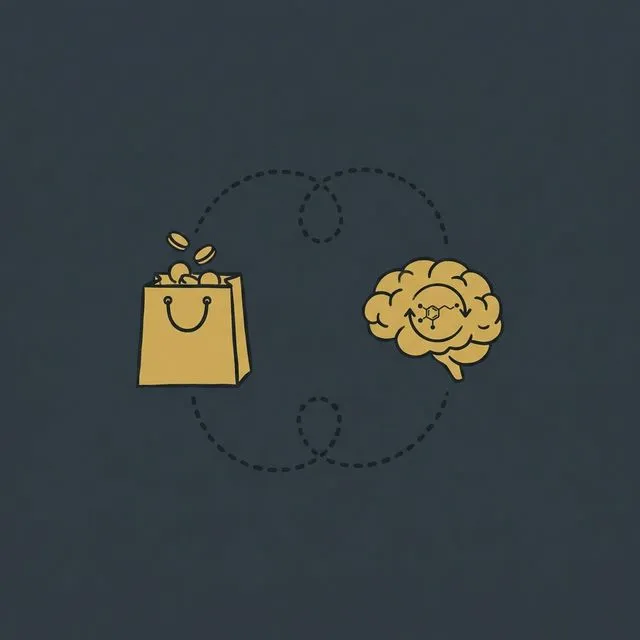
Dopamine shopping: Every purchase triggers a small dopamine hit — the same neurochemical that makes social media addictive. Your brain learns that buying = feeling good, creating a cycle where you shop to manage stress, boredom, or negative emotions. The no-buy challenge breaks this cycle by forcing you to find other dopamine sources.
The "treat yourself" trap: The concept of treating yourself has been weaponized by marketing. A genuine treat is occasional and meaningful. When it becomes a daily $7 latte, a weekly clothing haul, or a monthly gadget purchase, it's no longer a treat — it's a habit you've relabeled to avoid guilt.
Social comparison spending: Seeing what others buy on social media creates a persistent feeling that you need more. This "lifestyle inflation" is particularly insidious because it scales — the more you earn, the more you feel you should spend. A no-buy challenge resets your baseline expectations.
Convenience spending: The most dangerous category. Ordering DoorDash because cooking feels like effort. Buying a new charger because you can't find yours. Replacing something functional because a newer version exists. Convenience spending adds up to hundreds per month because each individual purchase feels justified.
Retail therapy: Using shopping as emotional regulation. Bad day at work? New shoes. Argument with your partner? Online shopping at midnight. The purchase provides momentary relief but doesn't address the underlying emotion — and the credit card statement later adds a new source of stress.
Recognizing which of these patterns drives your spending is the first step to breaking them.
How to Track Your No-Buy Progress

A no-buy challenge without tracking is just a vague intention. You need visibility into your spending to know whether you're succeeding — and to see the financial results of your discipline.
Track every non-essential purchase you avoid. Keep a running list of things you would have bought but didn't. At the end of each week, add up the total. This "saved" number becomes incredibly motivating — most people are shocked to discover they were spending $200–500/month on non-essentials they can easily live without.
Monitor your essential spending too. Sometimes cutting non-essential spending causes essential spending to creep up. If you stop dining out, your grocery bill might increase. That's fine — but you should know about it so you can see the net savings.
Use automated expense tracking. Manually logging every purchase is tedious and error-prone. The most effective approach is connecting your bank accounts to an app that automatically categorizes transactions. This way, every coffee, every Amazon purchase, every subscription charge is captured and categorized without you lifting a finger.
Review weekly, not daily. Checking too frequently creates anxiety. Checking too infrequently lets problems compound. A weekly review — ideally on Sunday evening — is the sweet spot. Look at your transactions for the week, celebrate the purchases you avoided, and plan for the week ahead.
Celebrate milestones. Track your cumulative savings over the course of the challenge. When you hit $500 saved, $1,000 saved, $5,000 saved — acknowledge it. Redirect some of those savings toward meaningful goals: paying down debt, building your emergency fund, or investing.
The data tells the story. Without it, the challenge is just willpower. With it, it's a measurable financial transformation.
Common No-Buy Mistakes and How to Avoid Them
Most people who fail a no-buy challenge make the same predictable mistakes. Knowing them in advance dramatically increases your success rate.
Mistake 1: Rules that are too strict. Banning all non-essential spending including social activities turns the challenge into a punishment. You'll resent it and quit. Build in reasonable exceptions for maintaining relationships and mental health.
Mistake 2: Not telling anyone. Keeping your challenge secret means fielding constant "want to grab dinner?" invitations without context. Tell close friends and family what you're doing. Most will support you — many will be inspired to join.
Mistake 3: Replacing spending with window-shopping. Browsing online stores "just to look" is like an alcoholic hanging out in bars for the atmosphere. Unsubscribe from marketing emails, delete shopping apps, and remove saved payment methods from websites. Remove the temptation entirely.
Mistake 4: Treating a slip as a failure. You will probably make at least one non-essential purchase during your challenge. That's normal. The challenge isn't about perfection — it's about dramatically reducing unnecessary spending. One slip doesn't erase weeks of progress.
Mistake 5: Not having alternatives ready. Boredom is the number one trigger for impulse spending. Before you start, prepare a list of free or low-cost activities: hiking, library books, free community events, cooking experiments, skill-building projects. When the urge to shop hits, go to your list instead.
Mistake 6: Ignoring subscriptions. You can be perfect at avoiding new purchases while paying $273/month in forgotten subscriptions. Before starting your no-buy challenge, audit and cancel every subscription you don't actively use at least weekly.
What Happens After the Challenge Ends
The real value of a no-buy challenge isn't the money saved during the challenge — though that's substantial. It's the permanent change in how you think about spending.
People who complete a 90-day or year-long no-buy challenge consistently report:
Changed default behavior. Before the challenge, the default was "buy it." After, the default becomes "do I actually need this?" This single mental shift is worth thousands of dollars per year, every year.
Reduced impulse sensitivity. The dopamine cycle weakens when you stop feeding it. After a few months without impulse purchases, the urge to buy things diminishes significantly. You still enjoy buying things you genuinely want — but the compulsive quality fades.
Clarity on what you actually value. When you can't buy everything, you discover what matters most to you. Some people realize they value experiences over things. Others discover that a few high-quality items bring more satisfaction than many cheap ones.
Financial momentum. The money saved during the challenge — typically $3,000–$10,000 for a full year — creates options. An emergency fund. Paid-off credit cards. Investment account contributions. This momentum compounds long after the challenge ends.
A new spending ceiling. Post-challenge, most people's spending settles at a level significantly below where it was before — typically 20-40% lower. You don't go back to your old patterns because you've proven to yourself that you don't need most of what you were buying.
The no-buy challenge is temporary. The mindset shift is permanent.
How Kinshi Makes Your No-Buy Challenge Effortless
Running a no-buy challenge with manual tracking is like trying to lose weight without a scale — possible, but you're guessing. Kinshi gives you the precision, automation, and insights to make your challenge measurably successful.
Automatic spending detection: Connect your bank accounts once and every transaction is captured automatically. No manual logging, no forgotten purchases, no gaps in your data. Every dollar is tracked whether you remember to log it or not.
AI-powered categorization: Kinshi's Gemini AI doesn't just record transactions — it understands them. "Starbucks" becomes "Dining/Coffee." "Amazon" purchases are categorized by type. This means you can instantly see how much you're spending on each non-essential category, making it obvious where your challenge needs the most focus.
Spending trend visualization: Watch your spending categories shrink over time as your challenge progresses. Kinshi's dashboard shows month-over-month comparisons so you can see your no-buy discipline reflected in actual numbers.
Subscription audit: Before your challenge even starts, Kinshi identifies every recurring subscription across all your accounts. Cancel the ones you don't need and eliminate hundreds in silent monthly charges.
AI chat for instant accountability: Ask Kinshi "How much have I spent on non-essentials this month?" and get an instant, honest answer. No spreadsheets, no mental math — just clear data when you need it.
Your no-buy challenge gives you the discipline. Kinshi gives you the data. Together, they transform an internet trend into a genuine financial turning point.
Take control of your finances.
Kinshi is the perfect companion for a no-buy challenge. AI-powered spending tracking automatically categorizes every purchase as a need or want, flags impulse buys in real-time, and shows you exactly how much you're saving — so you can see the results of your discipline in real numbers.
Join thousands who are mastering their money with Kinshi. Free to start, no credit card required.