How to Get Out of Credit Card Debt: A Step-by-Step Plan
Credit card debt is the most expensive kind of debt most people carry. Here's a clear, actionable plan to eliminate it.
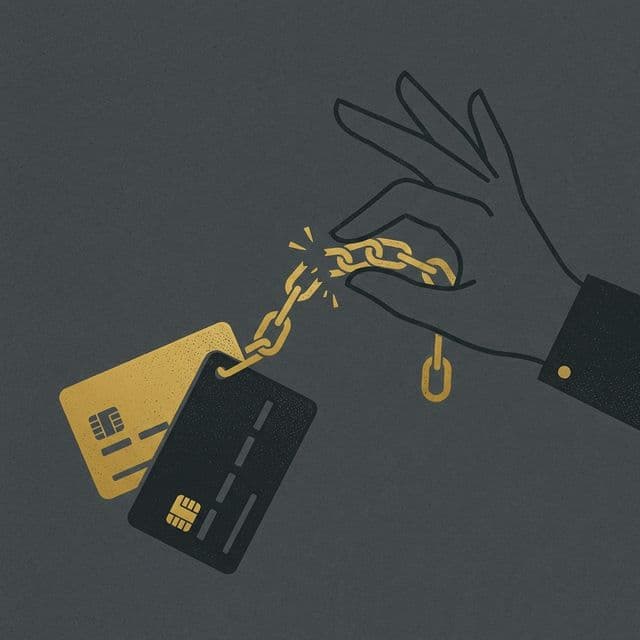
The Credit Card Debt Problem
The average American carries over $6,500 in credit card debt. With interest rates averaging 20% to 28% APR, that balance can cost you over $1,500 per year in interest alone — money that goes straight to credit card companies instead of building your future.
Credit card debt is uniquely destructive because of compound interest. When you carry a balance, you're not just paying interest on what you originally spent. You're paying interest on the interest. A $5,000 balance at 24% APR, where you only make minimum payments, can take over 20 years to pay off and cost you more than $10,000 in interest.
The good news? With a clear strategy, you can break free from credit card debt faster than you think. It requires understanding your numbers, choosing the right repayment method, and making deliberate changes to your spending habits.
Step 1: Face the Numbers
The first step is uncomfortable but essential — you need to know exactly how much you owe. List every credit card with its balance, interest rate (APR), and minimum monthly payment.
Many people avoid looking at their total debt because it feels overwhelming. But you can't create a plan without knowing the full picture. Think of it as a diagnosis — it's not comfortable, but it's necessary before treatment can begin.
Once you have your complete list, calculate two things: - Total debt: Add up all balances across all cards - Total minimum payments: Add up all monthly minimums
This gives you the baseline. Your goal is to pay more than the total minimum every month, directing the extra money strategically to eliminate balances one by one.
Step 2: Stop the Bleeding
Before you can pay off debt, you need to stop adding to it. This doesn't mean cutting up your cards necessarily — but it does mean changing your spending patterns.
Switch to debit or cash for daily spending. This creates a natural spending limit based on what you actually have, rather than what a credit company allows.
Remove saved cards from online stores. The friction of entering your card number makes you think twice about impulse purchases.
Unsubscribe from marketing emails. Promotional emails from retailers are engineered to trigger impulse buying. Removing them eliminates temptation at the source.
Track every transaction. Awareness is the most powerful spending reduction tool. When you see exactly where your money goes, you naturally start making different choices. An expense tracker that automatically categorizes your spending makes this effortless.
Step 3: Choose Your Payoff Strategy
There are two proven approaches to paying off multiple credit cards. Both work — but they work differently.
The Avalanche Method (Saves the Most Money) Order your debts by interest rate, highest first. Make minimum payments on all cards, then put every extra dollar toward the highest-interest card. Once it's paid off, roll that entire payment into the next-highest card. Mathematically, this saves you the most money.
The Snowball Method (Builds Momentum) Order your debts by balance, smallest first. Make minimum payments on all cards, then put every extra dollar toward the smallest balance. Once it's paid off, roll that entire payment into the next-smallest balance. This gives you quick wins that build psychological momentum.
Which should you choose? Research shows that people who use the snowball method are more likely to become debt-free because the early wins keep them motivated. But if you're highly disciplined and the interest rate differences are significant, the avalanche method will save you more money.
Choose the method that matches your personality. The best strategy is the one you'll actually follow through on.
Step 4: Find Extra Money to Accelerate Payoff
Minimum payments are designed to keep you in debt as long as possible. To get free, you need to find extra money to throw at your balances. Here are proven strategies:
Audit your subscriptions. The average person spends $273/month on subscriptions, and many are forgotten or underused. Cancel what you don't actively use.
Negotiate bills. Call your internet, phone, and insurance providers and ask for a better rate. Switching providers or threatening to cancel often triggers retention offers.
Sell unused items. That exercise bike collecting dust, the old electronics in your drawer, clothes you haven't worn in a year — these are dollars sitting in your house.
Reduce dining out by 50%. If you're spending $500/month eating out, cutting it to $250 gives you $250/month — or $3,000/year — to put toward debt.
Pick up a short-term side income. Even a few months of extra income from freelancing, tutoring, or driving for a rideshare service can dramatically accelerate your debt payoff.
Every extra dollar you put toward debt reduces the total interest you'll pay over time. Even an additional $100/month can cut years off your debt timeline.
Step 5: Consider Balance Transfer or Consolidation
If you have good credit despite your debt, you may be able to reduce your interest burden:
Balance Transfer Cards: Some cards offer 0% APR for 12–21 months on transferred balances. This gives you a window to pay down principal without interest accumulating. Be aware of balance transfer fees (typically 3–5%) and have a plan to pay off the balance before the promotional period ends.
Debt Consolidation Loans: A personal loan at a lower interest rate (typically 6–12%) can replace multiple high-interest credit card balances with a single, fixed monthly payment. This simplifies your bills and reduces total interest.
What to avoid: Don't take out a consolidation loan and then run your credit cards back up. This doubles your problem instead of solving it.
These tools are accelerators, not solutions. They work best when combined with changed spending habits and a clear payoff plan.
Step 6: Build Habits That Prevent Relapse
Getting out of debt is an achievement. Staying out of debt is a lifestyle. Here's how to make sure you don't end up back where you started:
Use the 24-hour rule. For any non-essential purchase over $50, wait 24 hours before buying. Most impulse purchase urges fade within a day.
Build a small emergency fund. Even $1,000 set aside for emergencies prevents you from reaching for a credit card when the unexpected happens.
Pay your statement balance in full every month. Once you're debt-free, this simple habit ensures you never pay credit card interest again.
Continue tracking your spending. The awareness you built during your debt payoff journey is your most powerful tool. Keep using it.
How Kinshi Helps You Crush Debt Faster
Paying off debt requires visibility into where your money goes — and that's exactly what Kinshi provides. By connecting your bank accounts and credit cards, Kinshi's AI automatically categorizes every transaction and shows you exactly which spending categories are eating into your debt payoff potential.
Use Kinshi's budget feature to set spending limits by category and track your progress with visual rings. The AI chat can analyze your specific spending patterns and suggest personalized areas where you could cut back.
Generate monthly PDF financial reports to see your progress over time. Month-over-month comparisons show your spending trends, making it clear whether your habits are improving. And when you need motivation, Kinshi's email reminders keep you on track with actionable savings tips delivered to your inbox.
Take control of your finances.
Kinshi helps you see exactly where your credit card spending goes with AI-powered categorization. Identify your biggest spending leaks, track your progress, and get personalized AI recommendations to reduce spending and pay off debt faster.
Join thousands who are mastering their money with Kinshi. Free to start, no credit card required.